
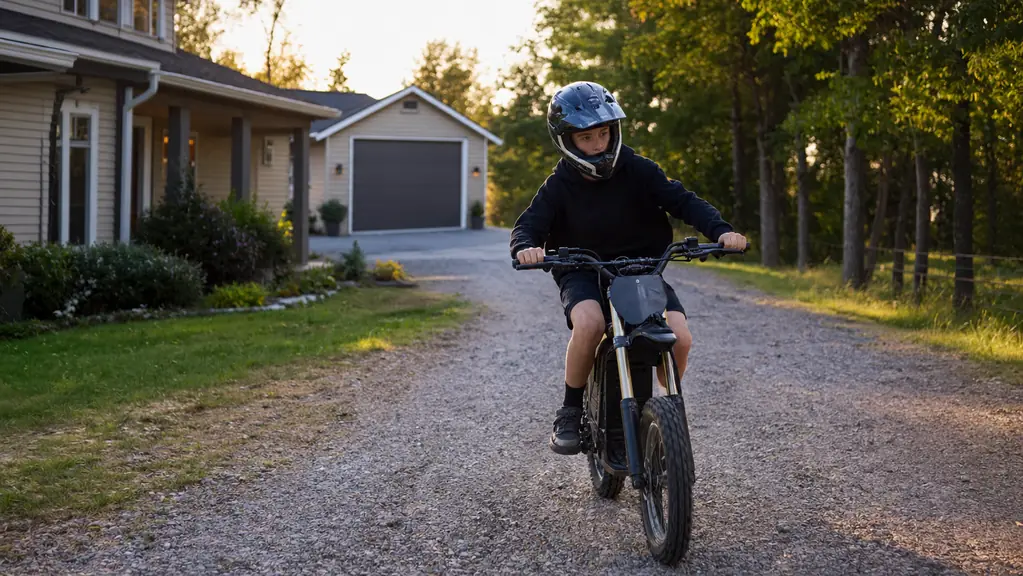
Every kid I know goes through the phase where a pedal bike stops being the dream and a dirt bike takes its place. Cody hit that phase early, and I told him we would sort it out when he was big enough. This spring, at 4 foot 7 and 75 pounds, he was. I bought the Razor MX400 Dirt Rocket in early April, put it together in the garage on a Saturday morning, and spent the next few weekends teaching him to ride it on our gravel driveway. Here is how that went, step by step, including the parts that surprised me and the mistakes I almost made.
If your driveway is gravel like mine, you might be wondering whether it is a workable place to learn. It is, with one big caveat: gravel changes how the bike behaves, and it changes what the kid has to learn first. On pavement, a little throttle goes a long way and small mistakes slide. On gravel, the tires dig in, the bike bucks, and the throttle teaches respect in a hurry. That sounds like a warning. It is also exactly why I would not trade the gravel for a smooth surface. A kid who learns on gravel learns to be gentle with the throttle, and that carries over to every surface after it.
The Bike That Taught Cody to Ride on Gravel
The Razor MX400 Dirt Rocket is the 24-volt electric bike we used for every step in this guide. It is rated for riders up to 140 pounds, tops out around 14 mph, and holds a 4.4-star rating from more than 600 reviews on Amazon. After a full season of gravel, grass, and trail riding, I understand the rating. If your kid is in the size range, this is the bike these steps assume.
Amazon Check Today's Price on Amazon →Step 1: Assemble It Yourself and Charge the Battery Before the First Ride
The Razor MX400 Dirt Rocket shows up mostly assembled. The handlebars bolt on, the front wheel goes on, and the battery needs a full charge before the bike moves under its own power. I did all of it in the garage on a Saturday morning with a socket set and about an hour. If you have ever put together a grill or a kids bike, you can handle this one.
The part that matters most is the battery. The manual says the first charge should be a full one, and I followed that to the letter. I plugged it into the outlet on the workbench side of the garage the night before the first ride and left it alone. The habit we settled into is simple: it charges overnight after riding, and a full charge covers a good afternoon of riding with breaks. I never think about the battery mid-ride, because the routine handles it.
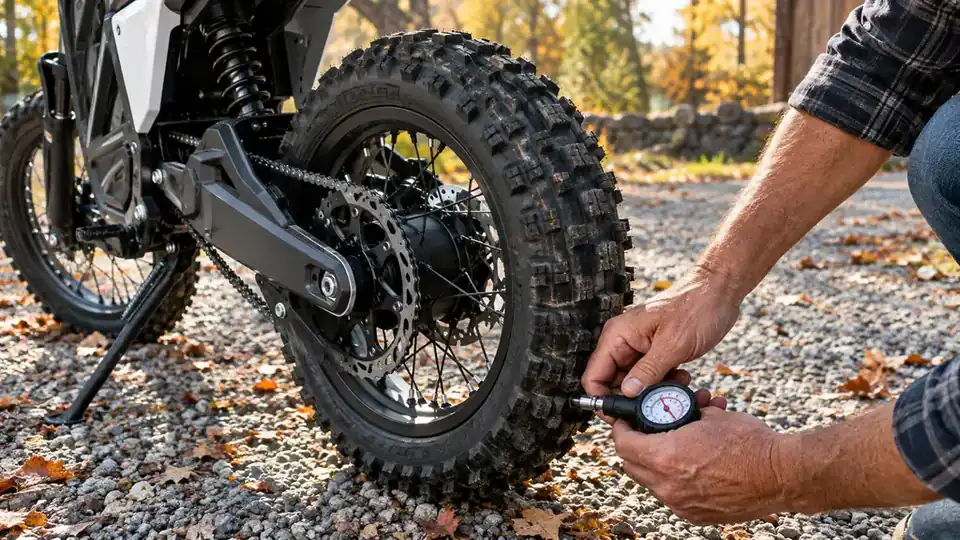
Before the first ride, I also checked the brakes and the tire pressure. That is not a one-time thing. It is the same two-minute check I do before the season starts and after any crash. A gravel driveway is hard on tires, and brake levers collect dust and grit. A pump with a gauge and an Allen key live on the pegboard by the garage door for exactly this reason. I also make sure the levers are set so a small hand can reach them without stretching. That detail matters more than people think, because a kid who cannot reach the brake comfortably will not use it well.
Step 2: Match the Bike to the Kid Before You Match the Kid to the Bike
Start with the age and weight rating Razor prints for the Razor MX400 Dirt Rocket, and follow it; the listing gives a maximum rider weight of 140 pounds. Those numbers are not a suggestion. The age rating tracks whether a kid's hands and feet can reach the controls, and the weight rating tracks whether the brakes and suspension can do their job. That is the whole rule.
Cody was about 75 pounds when he started, which puts him right in the middle of the rating. At 4 foot 7, his feet reach the ground comfortably when he stops, and his hands reach the handlebars without him stretching forward. If your kid has to reach for the bars or tip-toe at a stop, they are not ready for this bike yet, no matter what the age on the box says. Wait a season if you have to. A bike that is slightly too big is how a lot of the worst first rides happen, and a scared kid does not get back on. The right size makes the learning fast. The wrong size makes it scary.
Fit also means gear. Cody wears the OUWOER Kids Bike Helmet we bought in March on every ride, with the dial adjusted so it does not slide. Closed-toe shoes are non-negotiable, and I do not let him ride in sandals even to the end of the driveway. Long pants help on gravel because the tires throw small stones. The first time he rode in shorts, he came in with a half-dozen little red marks on his calves. He wore pants the next day without being told.
Step 3: Teach the Controls on Flat Ground With the Power Off
The first lesson did not involve the throttle at all. I had Cody push the Razor MX400 Dirt Rocket up and down the flat grass back yard with the power off, first walking beside it, then coasting with his feet up. That sounds boring, and it is supposed to be. He learned where the brake lever is without having to think about it, and he learned how the bike feels when it is moving under him before the motor added anything.
The second part of that first lesson was the kill switch and the throttle, in that order. I showed him where the power button is, showed him what the throttle does, and made him show me he could find the brake without looking down. On gravel, the kid who has to hunt for the brake is the kid who grabs a handful of it and locks the rear wheel. Ten minutes of power-off practice prevented a lot of that. I also had him practice putting a foot down at a stop, because a gravel driveway can have a little slope to it, and the bike will want to roll when he stops.
We did this on the grass, not the gravel. Grass is slower and more forgiving, and it lets a kid build the muscle memory for the controls before the surface starts fighting back. The gravel driveway came later, once he had stopped thinking about his hands and started thinking about where he was going.
Step 4: First Powered Rides, Short and Slow, on the Flattest Ground You Have
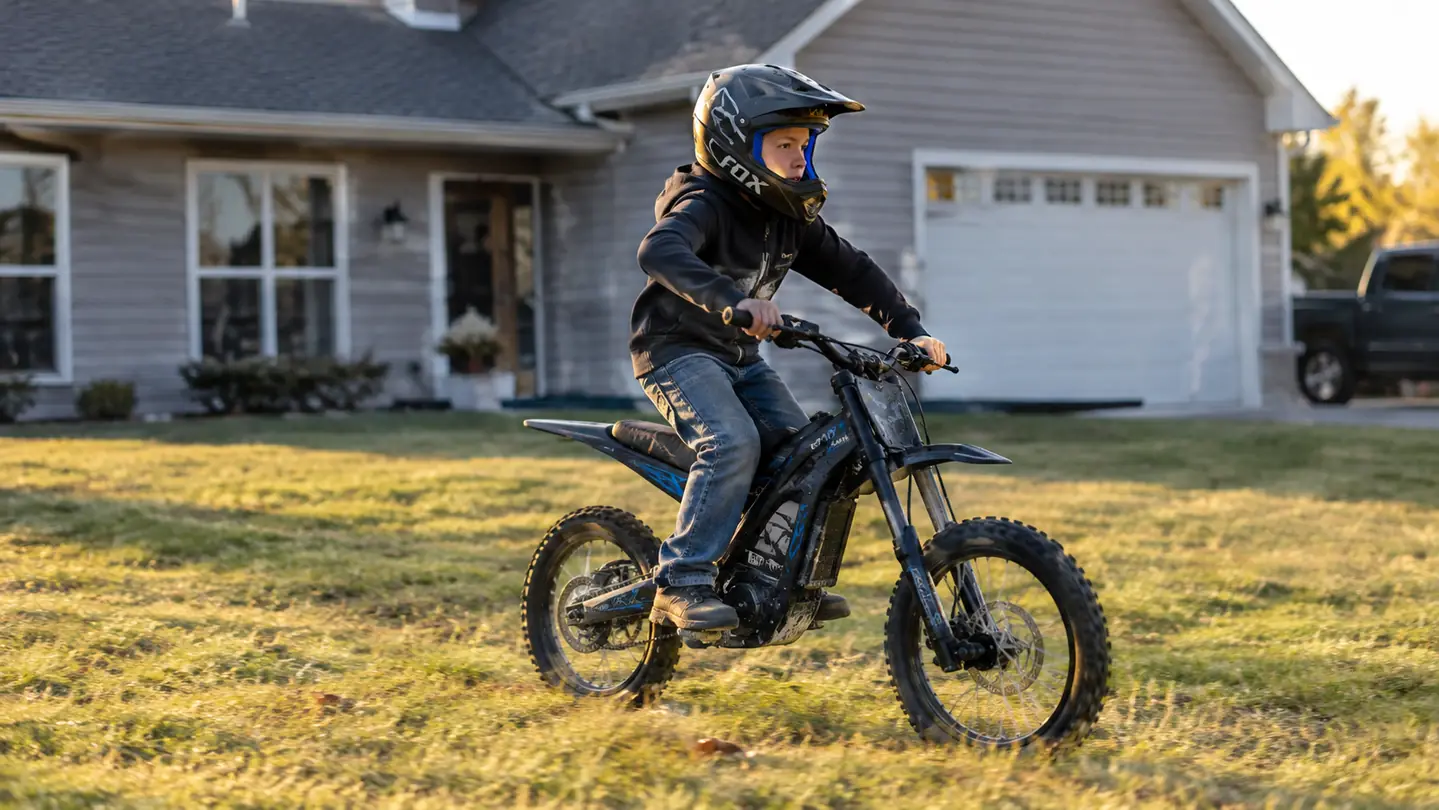
After one short first lap of the gravel driveway with me jogging alongside, his first real lesson was on the grass, with me walking next to him. I told him to roll the throttle on gently and to focus on one thing: stopping where he meant to stop. We did not have a distance goal. We had a stopping goal. He would ride 20 feet, squeeze the brake, put a foot down, and look at me. Then he would do it again. We kept at it until he could stop in the same spot three times in a row. That was the whole lesson, and it was enough for day one.
The mistake I see parents make is letting a kid open the throttle on the first day. The Razor MX400 Dirt Rocket will do about 14 mph at full throttle, and on grass that is fast enough to feel like flying and fast enough to end a lesson early. Cody got comfortable at a quarter throttle in about 20 minutes. The speed came later, in small steps, and only after the stopping was automatic.
This is also where the gravel driveway earned its keep. Once Cody could start, roll, and stop on grass, we moved to the driveway, and gravel immediately made him a better rider. The tires slip a little, the stones rattle, and the bike feels alive in a way it does not on flat grass. He learned to feather the throttle through the loose stuff instead of grabbing it. That is a skill that carries over to the dirt trail along our tree line, where he rides now.
Step 5: Set the Rules of the Property and Stick to Them
The rules around here were in place before the bike was out of the box. Cody rides the Razor MX400 Dirt Rocket on the gravel driveway, the grass back yard, and the dirt trail along the tree line. He does not ride it on the concrete pad in front of the garage, because that pad is for the basketball hoop and the Crazy Cart Shift he got for his birthday in June. And he never rides on the road. Not to the mailbox, not just to the end of the driveway. The road is off the table, full stop.
There is always an adult outside. Usually it is me, sometimes Jen watches from the porch, but one of us is out there for every ride. That is not hovering. A 10-year-old on a 14 mph bike can be out of sight in about four seconds, and a gravel driveway has a way of turning a small mistake into a tumble. The helmet and the supervision are the two reasons nothing has ever been worse than a scraped elbow.
The last rule is the one Cody complains about the least: the bike gets checked after any crash, and it gets put away in the garage when he is done. I check the brakes and tire pressure before the season and after any crash, same as I do on his pedal bike. It charges on the workbench outlet overnight and it is ready the next afternoon. A bike that is stored and charged on a routine is a bike that works when the kid actually wants to ride. The routine also means nothing gets left out in the weather, and a bike that stays dry is a bike that does not need fixing every weekend.
What Else Helps
A few things made this easier than it could have been. The OUWOER Kids Bike Helmet fits Cody properly, with the dial adjusted so it does not slide around, and a helmet that fits gets worn without a fight. A basic tire pump with a gauge lives on the pegboard by the garage door, because gravel eats air pressure and soft tires make the bike handle like a grocery cart. Knee and elbow pads hang on that same pegboard, and he wears them on the trail, where a low branch or a rut can come up fast. On the driveway, the helmet and long pants are the minimum. On the trail, the pads go on. And I learned to keep my mouth shut while he rides. He does not need a running commentary on every bump. He needs to know I am there and that the rules have not changed.
A 10-year-old on a 14 mph bike can be out of sight in about four seconds. That is why there is always an adult outside.
Ready to Start on Your Own Driveway?
The Razor MX400 Dirt Rocket is the bike that taught Cody to ride on gravel, grass, and the trail behind our house. It is rated for riders up to 140 pounds, which means room to grow, and it has taken everything a 10-year-old has thrown at it. If your kid is in the size range and you have a patch of ground that is not a road, this is the bike I would buy again.
Amazon Check Today's Price on Amazon →