
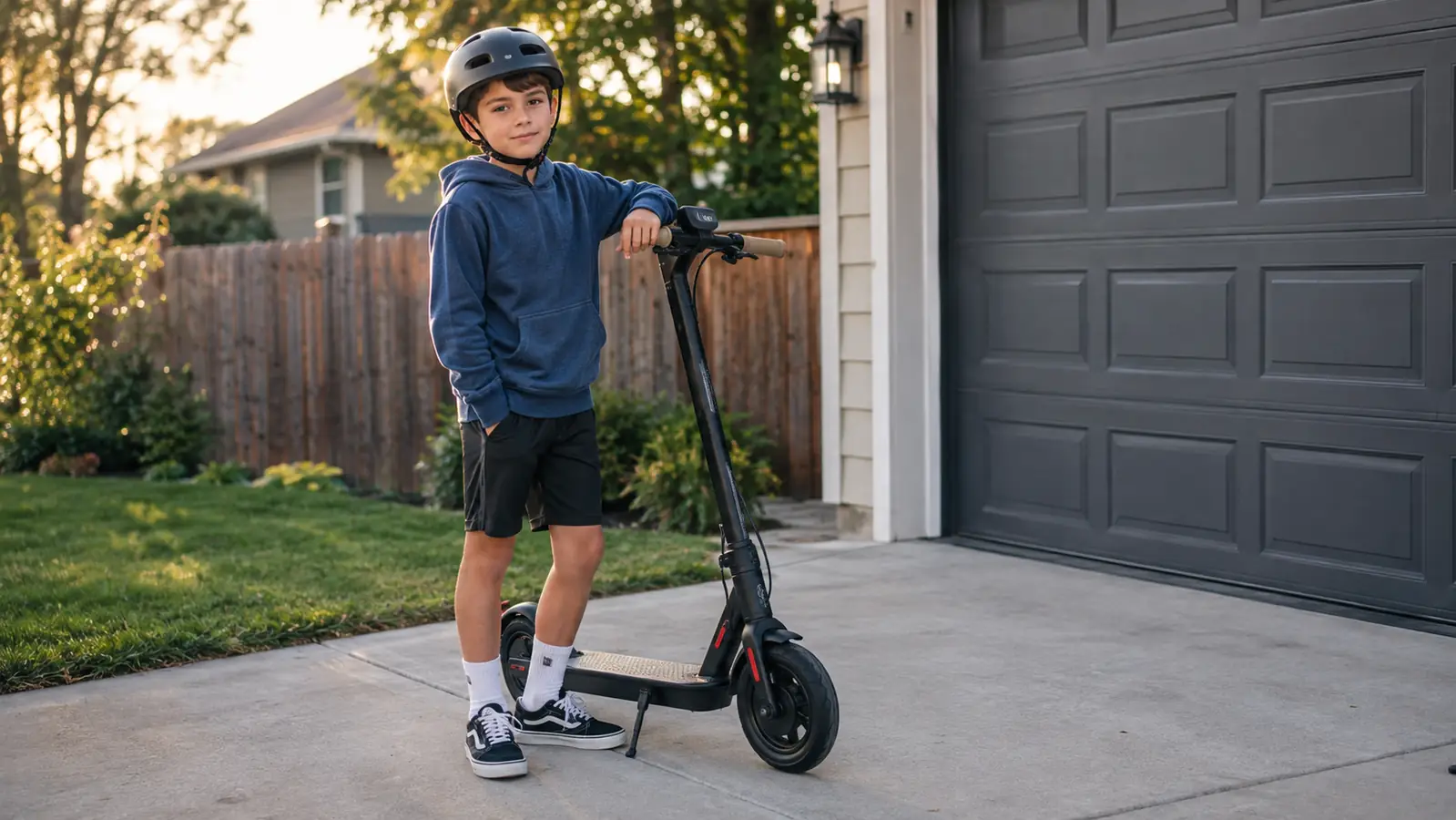
The first time my son Cody asked to ride an electric scooter, I did what I do with most things that have wheels: I said yes, then I went out to the garage and thought hard about how to do it without turning the whole thing into a fight or a trip to urgent care. He was 9 then, a little shorter than he is now, and the scooter we had was the Gotrax Kids Electric Scooter, the one rated for kids 6 to 12 with a thumb throttle and a top speed around 7.5 mph. It is not a fast machine. That is exactly why I would pick it for a first ride.
Teaching a kid to ride an electric scooter is not the same as teaching a kid to ride a bike. There is no balancing act that takes weeks to click. The scooter does the balancing for you, mostly. What takes time is teaching the throttle, the brake, and the judgment to know when not to use either. Here is the order I used with Cody, the one I would hand to any parent who is about to do the same thing.
Start with a scooter that matches your kid's size and speed
The Gotrax Kids Electric Scooter is built for riders 6 to 12, tops out around 7.5 mph, and uses a thumb throttle that small hands can manage. It is the scooter I used for every step below.
Amazon Check Today's Price on Amazon →Step 1: Set Up the Scooter Before the Kid Ever Sees It
Do the assembly in the garage with the door closed, or at least do it when your kid is not standing there bouncing on his heels. The Gotrax Kids Electric Scooter comes mostly assembled, but you still want to check the handlebar clamp, the folding mechanism, and the wheel nuts before the first ride. I went over every bolt I could reach with the right Allen key and gave the tires a squeeze to confirm they were inflated.
Charge the battery fully before the first ride. The listing says the scooter will go up to 3.75 miles per charge, and a full charge covers a good afternoon of riding with breaks. I charged it overnight on the workbench outlet, unplugged it in the morning, and did not let Cody touch it until I had checked the brakes. The rear brake on this scooter is a foot brake, which means the rider presses down on the rear fender to slow down. That is a simple system, and it is the right system for a first scooter, but it only works if the rider knows it is there.
One more setup note: set the handlebar height so the bars sit about waist height when your kid stands on the deck. Too high and the steering feels vague. Too low and the kid hunches over the throttle. Cody is 10 now, about 4 foot 7, and the handlebar on the Gotrax Kids Electric Scooter has enough adjustment range that I could set it for him and still raise it a notch next year.
Step 2: Teach the Glide Before the Throttle
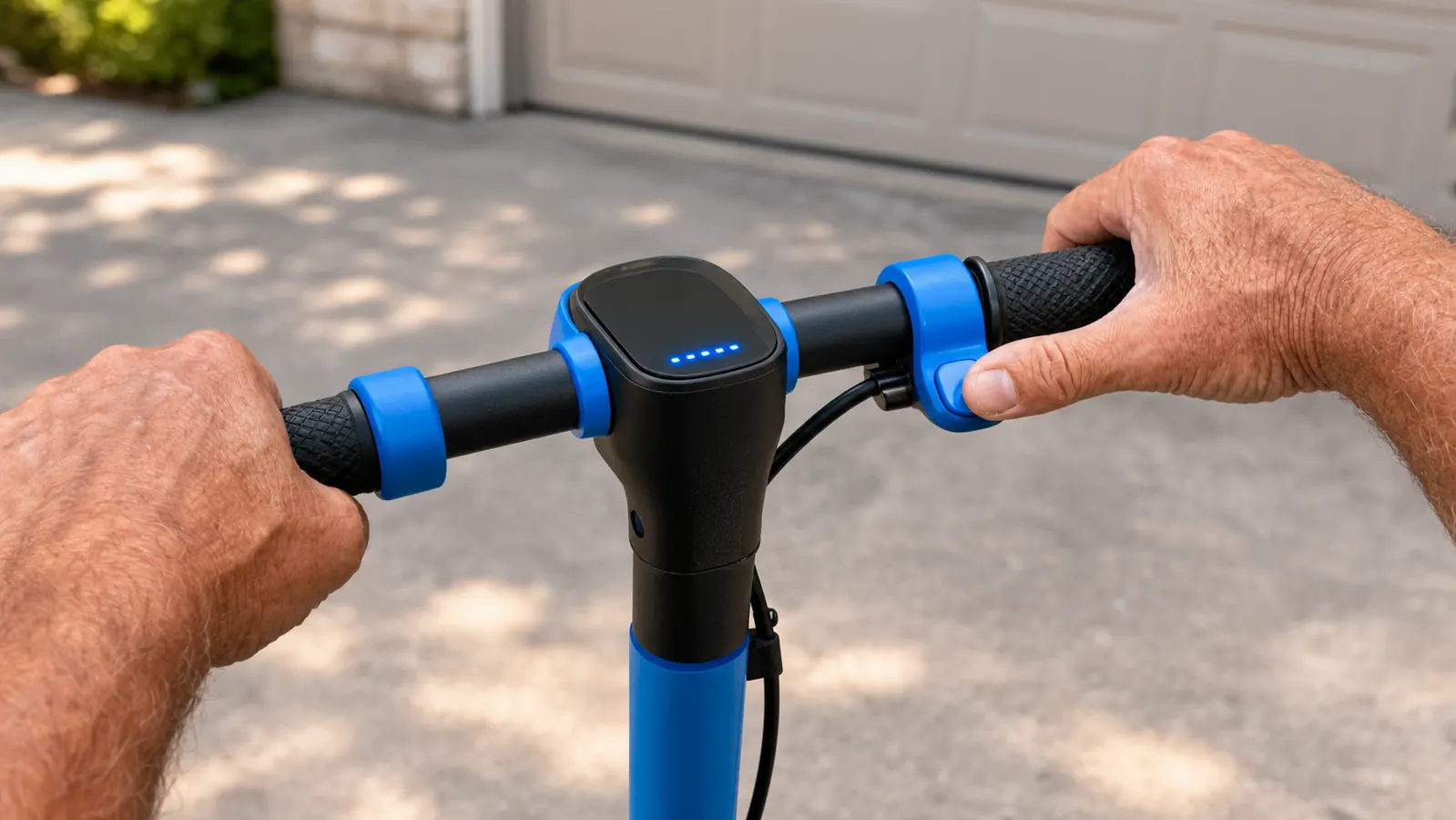
The biggest mistake I see parents make is handing a kid a charged scooter and saying, "go slow." A kid who has never felt the throttle has no idea what slow feels like. So we started with the scooter off. Cody put both hands on the bars, one foot on the deck, and pushed with the other foot like it was his old kick scooter. The Gotrax Kids Electric Scooter rolls fine with the power off, which is a feature I did not expect to matter as much as it did.
We did this on the smooth concrete pad in front of the garage, not on the gravel driveway and not on the grass. The concrete pad is flat, dry, and wide enough that a wobble does not end in a ditch. Cody pushed around for ten minutes, getting a feel for the deck width, the handlebar height, and what it feels like when the front wheel turns. He already knew how to kick a scooter from the plain kick scooter he had before, so this part took one session. If your kid has never ridden any scooter, plan on two or three sessions of pushing before you ever turn the power on.
The point of the glide is not exercise. It is muscle memory. When the throttle eventually kicks in, the kid needs to already know where his feet go, where his hands go, and how the scooter leans. If he is still thinking about any of that, he is not ready for power.
Step 3: Introduce the Throttle in Short Bursts
The Gotrax Kids Electric Scooter uses a thumb throttle on the right handlebar. That is a deliberate choice, and it is the right one for kids. A twist grip takes more hand strength and can be harder to release in a panic. A thumb throttle is either on or off, and a kid can let go of it instantly. I showed Cody where it sat, had him rest his thumb on it with the scooter still off, and then told him to give it the tiniest press he could manage.
The first powered ride lasted about four seconds. Cody pressed the throttle, the scooter moved forward at a walking pace, and he let go immediately. Then he did it again. And again. We spent the whole first powered session doing nothing but short bursts across the concrete pad, ten feet at a time, with me walking alongside. I did not let him hold the throttle open until he could show me he could stop.
Here is the part that surprised me: the scooter's top speed of 7.5 mph is not the danger. The danger is the gap between what a kid expects and what the scooter does. A kid who has only ever kicked a scooter expects the ground to slow him down. An electric scooter does not slow down when you stop pushing. The throttle stays on until the thumb comes off. That is the single most important lesson in the whole process, and it is why we practiced short bursts before anything else.
Step 4: Teach the Foot Brake Before Speed
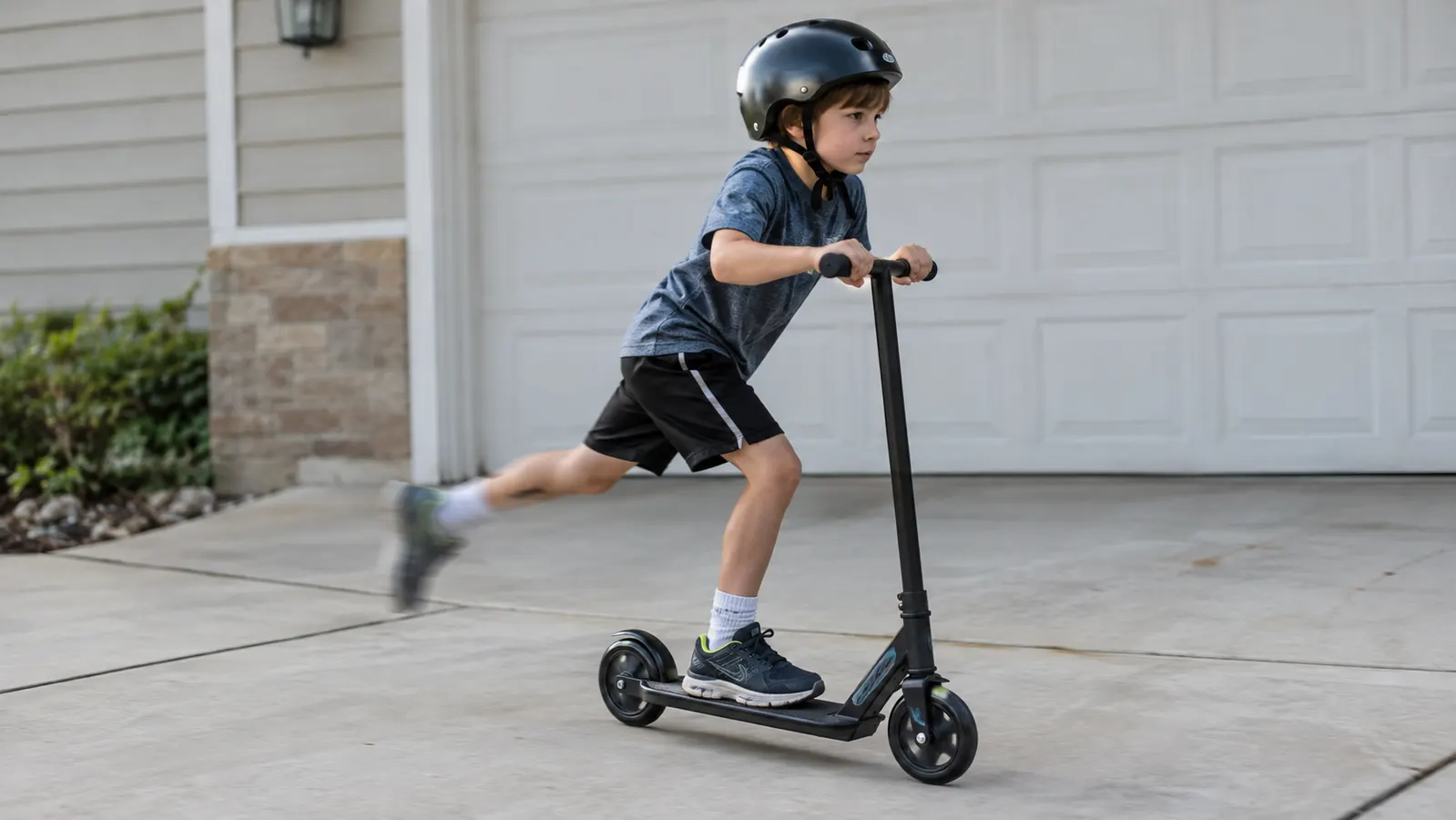
The Gotrax Kids Electric Scooter stops with a foot brake on the rear fender. To use it, the rider takes the back foot off the deck and presses down on the fender until the wheel slows. It is a simple brake, and it is easy to teach, but it has to be taught before the kid is moving fast enough to need it.
We practiced stopping from a walking pace first. Cody would push off, coast a few feet, and then press the rear fender with his back foot. The first few times he stomped too hard and the back wheel locked up, which made the scooter skid a little. That is normal. I told him to press gradually, like he was squashing a soda can, not stomping a bug. Within one session he could stop smoothly from a slow roll.
Then we practiced stopping from a slightly faster roll, then from a short powered burst. The rule I gave Cody was simple: the brake comes before the turn, and the thumb comes off before the brake. If you are still holding the throttle while you press the brake, you are fighting yourself. I checked the brake pads and the rear wheel after the first few sessions, and I check them again at the start of every season and after any crash. On a kids scooter, the brake is the part that has to be right.
Step 5: Add Turns, Then Add Judgment
Once Cody could start, roll, and stop in a straight line, we added turns. We started with wide, slow turns at the edge of the concrete pad, the kind where you barely move the handlebar. Then we moved to figure eights, which force the rider to turn both directions and learn to lean slightly into the turn. The Gotrax Kids Electric Scooter handles turns fine at low speed, but it is not a toy that will save a rider who enters a turn too fast. The foot brake is the only brake, and it is on the rear wheel, so the rider has to slow down before the turn, not in the middle of it.
After the figure eights came the judgment part, which is the part no scooter can teach. I set up a simple course with a few objects on the concrete pad: a bucket, a folded chair, a chalk line. Cody had to ride the course without touching anything, which meant looking ahead, deciding when to brake, and deciding when to coast. He knocked the bucket over twice, which was exactly the point. Better to knock over a bucket on the pad than to learn the same lesson near a parked car.
The last rule I added was the one that matters most: the scooter stays on the concrete pad. Cody rides the Gotrax Kids Electric Scooter only on the smooth, flat, dry surface in front of the garage. It does not go on the gravel driveway, it does not go on the grass, and it never goes on the road. The listing rates it for kids 6 to 12, and I follow the age and weight rating the manufacturer prints for it. An adult is outside for every ride, and the helmet goes on before the scooter comes out of the garage.
What Else Helps
A few things made the whole process easier. The OUWOER Kids Bike Helmet we bought this March fits Cody properly, with the dial adjusted so it does not slide around, and he wears it on every ride. Closed-toe shoes matter more than people think, because the foot brake works by pressing the rear fender, and sandals make that a bad idea. I also keep the scooter charged on the workbench outlet in the garage, which means it is always ready but never sitting in the sun. And I check the tire pressure and the brake before the season starts, after any crash, and any time the scooter has been sitting for a few weeks.
If your kid has never ridden any scooter, do not skip the glide step. If your kid has only ridden a kick scooter, expect the throttle to feel strange for the first session. If your kid is at the top of the weight range for a scooter, expect the acceleration to be gentler and the top speed to be a little lower, which is not a bad thing for a first ride. The Gotrax Kids Electric Scooter is rated for kids 6 to 12, and it is the scooter I would buy again for a first electric ride.
The throttle stays on until the thumb comes off. That is the single most important lesson in the whole process.
Ready to start the glide step tonight?
The Gotrax Kids Electric Scooter is the one I used to teach Cody, and it is still the scooter I would pick for a first electric ride. Helmet on, adult outside, concrete pad only.
Amazon Check Today's Price on Amazon →