
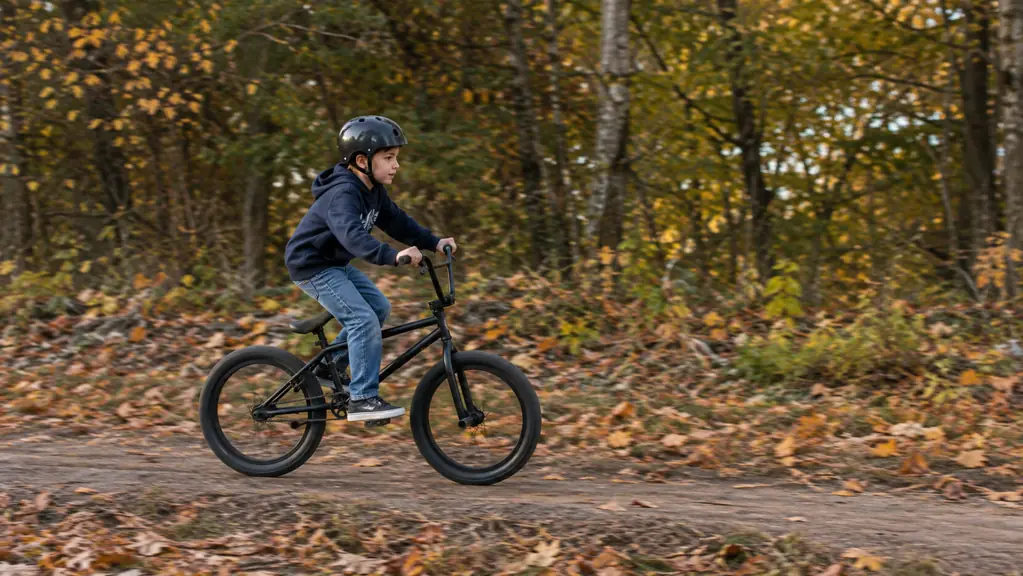
Last fall I bought my son Cody a 20-inch Joystar Brockway BMX to replace the heavy big-box bike he had been fighting with for a year. He was 9 then and a little smaller, and the old bike's weak brake and clumsy frame had turned every ride into a small argument. I wanted something simpler and tougher with a brake that works, and I wanted it to survive a season of gravel driveway, grass and the dirt trail along our tree line. A full season later, I have opinions.
This is the long version: how the Joystar Brockway BMX went together, how it fits a growing 10-year-old, how the brakes held up, where it shines on our property, and the honest list of things I would change or warn a neighbor about. Cody rides it almost every day the weather allows, always with a helmet and closed-toe shoes, always with me or my wife Jen outside. He never rides on the road.
The Quick Verdict
A sturdy, well-built 20-inch BMX that took everything a 10-year-old could throw at it for a full season. Setup is straightforward, the frame is tough, and the brake is a real brake. It is not a premium race bike and the stock grips and seat are basic, but for the money it is the bike I would buy again.
Amazon Check Today's Price →The 20-inch BMX that survived a season of gravel, grass and trail
If your kid is ready to move up from a heavy big-box bike, the Joystar Brockway BMX is the one I put together in the garage and handed to my son. Check today's price and current sizing on Amazon.
Amazon Check Today's Price on Amazon →How I've Used It
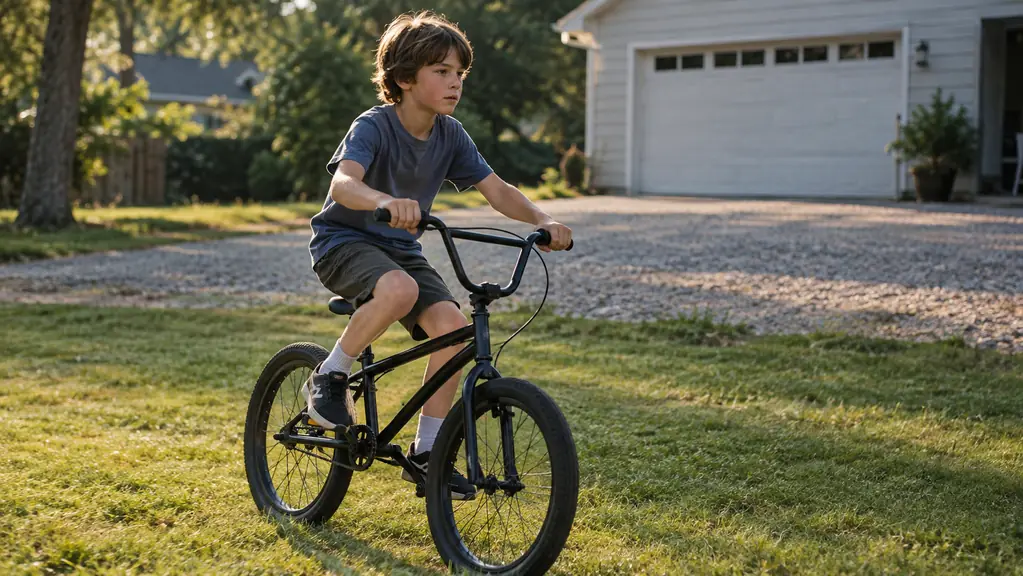
The Joystar Brockway BMX lives in our attached two-car garage with everything else that has wheels. Cody rides it on the long gravel driveway, the flat grass back yard, the dirt trail along the tree line, and the big poured-concrete pad in front of the garage. That mix of surfaces is exactly what a BMX is supposed to handle, and it is also the hardest test I can give a kids' bike in a single season.
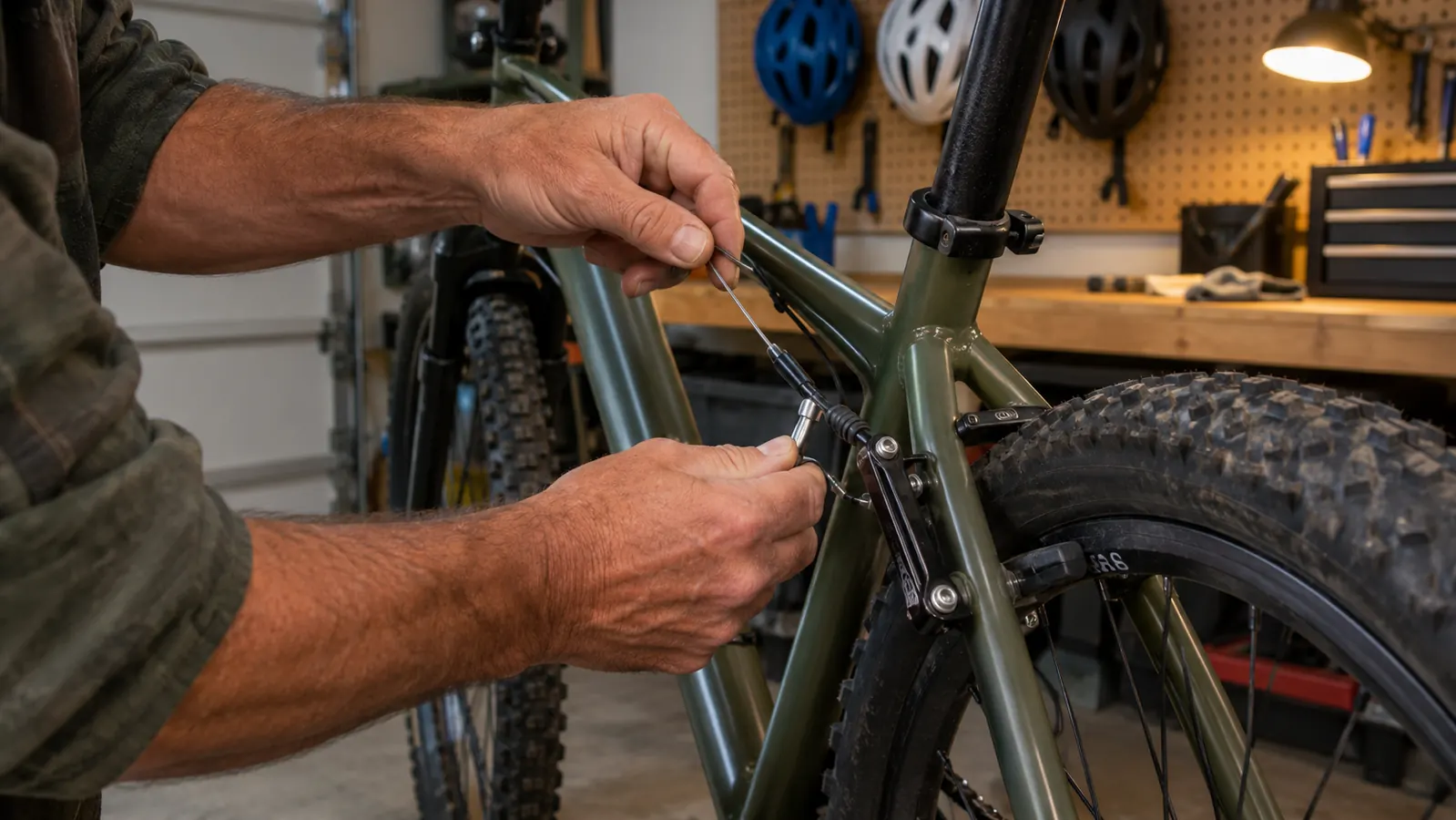
I assembled it myself last fall: front wheel, handlebars, seat, pedals, and a brake adjustment. The whole job took me about an hour with basic tools, and the only fiddly part was getting the brake cable tension right so the rear brake grabbed firmly without dragging. I checked the brake and tire pressure before the season started, again after any crash, and once more when we pulled it out this spring. Nothing has broken beyond normal wear.
Cody is 10 now, about 4 foot 7 and 75 pounds, and he rides the Joystar Brockway BMX almost daily from spring through fall. He is not a tentative rider. He charges down the driveway, cuts across the grass, and works the little jumps and roots on the trail. The bike has been dropped, skidded, rained on and left leaning against the garage more times than I can count. It still rolls straight and the steering still feels tight.
One fall afternoon I measured the driveway with a tape: it is 92 feet from the garage door to the gate at the road. I had Cody ride it at a steady pace and timed him with my phone. He covered it in about 9 seconds on the Joystar Brockway BMX, which told me the gearing is low enough for a 10-year-old to get moving without a push. A couple of weeks after that, a storm left a puddle across the gravel near the gate. He rode through it twice to hear the tires splash, then left the bike leaning against the garage overnight with grit in the chain. A quick hose-down and a drop of chain lube had it rolling smooth the next morning.
What Makes the Joystar Brockway BMX Different
The first thing I noticed lifting the Joystar Brockway BMX out of the box was the weight. The big-box bike it replaced felt like it was made of plumbing pipe. This one is not a light bike either, but it is built far better, and that matters more than almost any spec on a kids' bike. A solid frame and a brake that works make it easier for a 10-year-old to control. Cody stopped complaining about the brake, because this one actually stops.
Neither bike is light, and Cody has learned to roll the Joystar over a fallen branch on the trail rather than carry it. The difference is everything else: a bike that stops when he squeezes the brake and does not flex under him is a bike a kid will actually ride, and one that does not end the ride when something gets in the way.
The frame is a real BMX-style frame, not a toy frame with BMX stickers. The geometry puts the rider in a slightly forward, ready position that suits the trail and the driveway. One afternoon I checked the frame against the old bike side by side: the Joystar's top tube is about two inches shorter, which puts Cody's center of gravity further back, and the bottom bracket sits low enough that he can put a foot down without leaning the bike. The wheels are 20-inch with knobby tires that grip gravel and grass far better than the smooth tires on the old bike. On the concrete pad, the tires roll fast and predictable. On the dirt, they bite in where the old bike would have slid.
The brake is the other big difference. The old bike's brake was weak enough that Cody would drag his feet to stop, which is a habit I hate. The Joystar Brockway BMX has a rear brake that actually stops the bike. After I set the cable tension, one squeeze brings the bike to a controlled stop from a reasonable pace. I tested it the day I finished assembly: I had Cody ride at a slow roll on the concrete pad, then squeeze the brake, and he stopped in about two bike lengths without the rear wheel locking up. That single feature is the reason I trust him on the trail at all.
One thing that surprised me the most was how well the Joystar Brockway BMX took a direct drop. In early spring, Cody put the front wheel into a small rut on the trail and went over the bars into the grass. He was wearing his helmet and came up with a scraped elbow, no worse. The bike landed on its top tube and handlebar, and I expected a bent bar or a cracked frame. It came up with a dented grip and a scratched top tube, but everything still aligned. The steering was straight and the wheels still spun true. That happened in April, and I have not had to replace a single part since.
How It Rides on Gravel, Grass, Trail and Concrete
Our gravel driveway is the daily test. Loose stone is unforgiving to a bike with weak tires or sloppy steering. The Joystar Brockway BMX tracks straight through it, and the knobby tires shed the small stones without packing them into the tread. Cody can roll down the driveway at a sensible pace and brake at the bottom without the rear end stepping out. That was not true on the old bike. One afternoon in mid-September, after a week of rain, the driveway had washed a few ruts near the gate. Cody rode down it at a jogging pace, and the front wheel tracked through the loose gravel without wandering. He had to stand up for about ten feet on the way back up, and the bike climbed without slipping. That is the kind of traction a kid needs when the surface is not perfect.
The grass back yard is where he does most of his laps. The bike rolls easily over the flat lawn, and the slightly aggressive tire tread gives him enough grip to carve turns without washing out. On a hot July afternoon, the grass was dry and patchy, and the tires bit into the hard-packed dirt underneath. He can cut a tight figure-eight around two lawn chairs without touching a leg. On the dirt trail, the bike feels planted on the packed surface and handles the small roots and ruts without kicking the handlebars. The concrete pad in front of the garage is the fastest surface, and the bike feels stable there too, with no wobble at the speeds a 10-year-old reaches.
One honest note: this is a freestyle-style BMX, not a race bike. It is built for tricks, jumps and general toughness, not for shaving grams or winning sprints. For a kid who wants to ride trails, the driveway and the skatepark, that is exactly the right trade. For a kid who wants to race competitively, there are lighter, more specialized bikes at a higher price. I bought the Joystar Brockway BMX for the first kind of kid, and it has been the right call.
One day in dry September I took Cody out to the trail and watched him work the same short section over and over: a 12-foot stretch with two roots and a soft spot at the end. The first pass he stood up through the roots and the rear wheel kicked sideways a little. On the second pass he stayed seated and carried a touch more speed, and the bike tracked through clean. He tried a third pass and put a foot down on the soft spot. The point is, the bike gave him room to learn line choice without ever trying to buck him off. That is what I want from a kid's BMX: predictable enough that the rider can improve.
The brake is the reason I trust him on the trail at all. One squeeze brings the bike to a controlled stop, and that is the difference between a bike I watch and a bike I let him ride.
Fit, Assembly and the Details That Matter
The Joystar Brockway BMX is sold in 20-inch and 24-inch wheel sizes, and the listing says it fits kids 6 to 12. Cody is at the taller end of that range at 4 foot 7, and the 20-inch size fits him well with the seat set in the middle of its adjustment range. He can stand over the top tube comfortably and put both feet flat on the ground when he stops. We measured the seat post height against his inseam: with the seat at 24 inches from the ground, his knees have a slight bend at the bottom of the pedal stroke. I have set the seat two notches higher since spring as he has grown. That is the fit test I care about: if a kid cannot stop and put a foot down easily, the bike is too big.
Assembly took me about an hour. The front wheel, handlebars, seat and pedals all went on with basic tools, and the instructions were clear enough that I did not have to guess. The one step that needs patience is the brake adjustment. The cable comes with the barrel adjuster in a neutral position, and you will want to dial in the tension so the brake pads engage firmly without rubbing the rim when the wheel spins free. I tried two settings: the first left the brake too loose, so Cody could pull the lever to the bar and barely slow down. I took the wheel off, backed out the cable pinch bolt, pulled the cable a quarter inch tighter, and retightened. That fixed it. Plan for 10 extra minutes on that step and you will be happy you took them.
The stock grips are basic and a little thin for my taste, and the seat is on the firm side. Neither is a reason to skip the bike. Grips are a five-minute swap if your kid wants something softer, and the seat has been fine for the hour-long rides Cody does. The pedals are solid and have held up to a season of gravel and grass. The chain guard is a small touch I appreciate, because it keeps pant legs and shoelaces out of the drivetrain. One afternoon Cody's shoelace came untied and caught the chain guard; the guard did its job and the lace just got chewed instead of pulling him off the bike. That is a small thing, but it is exactly the kind of small thing that makes a bike safe for a 10-year-old.
Over the season, I have had to make a few small adjustments. In spring, I set the seat post so the top of the seat was 24 inches from the ground when the post was in the middle of its range; that gave Cody a slight bend at the knee at the bottom of the pedal stroke. By late summer he had grown enough that I raised the seat two notches. On the brake side, I re-checked the cable tension once after a heavy week of trail riding. The rear brake still grabbed firmly, but the cable had stretched enough that the lever came a little closer to the grip. I backed out the barrel adjuster a half turn, and that was the whole fix. I also swapped the stock grips for a softer set because Cody's hands got sore on longer afternoon rides. The stock grips are fine for short sessions, but a foam grip with a bigger diameter makes a real difference when your kid rides for an hour at a time.
Pros and Cons
What I Liked
- Far sturdier than the typical big-box 20-inch bike, with a brake that actually stops
- Real rear brake that stops the bike reliably once the cable is adjusted
- Knobby tires grip gravel, grass and dirt trail well
- Tough frame and components that survived a full season of daily riding, drops and skids
- Straightforward assembly with clear instructions, about an hour with basic tools
- Good fit range for a growing 6 to 12 year old, with room to raise the seat
Where It Falls Short
- Stock grips are thin and basic; I swapped them for softer ones
- Seat is firm and not built for long all-day rides
- Brake cable needs a careful adjustment during setup to get the tension right
- Not a race bike; if your kid wants to race competitively, there are lighter, more specialized options
- One hand-operated rear brake, which is fine for this size but worth knowing
How It Compares to the Big-Box Bike It Replaced
Before the Joystar Brockway BMX, Cody rode a cheaper 20-inch bike from a big-box store. That bike was heavy, the frame felt flexy, and the brake was weak enough that he would drag his feet to stop. The difference is not subtle. The Joystar Brockway BMX is stiffer, better built and stops properly, and those three things changed how Cody rides. He went from fighting the bike to actually riding it. The first week he had the Joystar, he came inside and said 'Dad, I didn't even think about the bike the whole ride.' That was the review I needed.
The old bike also had a coaster brake, which meant Cody could not stop quickly in an emergency without pedaling backward first. The Joystar Brockway BMX has a hand-operated rear brake, which is a more natural and faster way for a kid to stop. That is a safety improvement I would not go back on. If you are upgrading from a coaster-brake bike, expect a short learning curve, then a kid who stops with confidence. Cody took about an hour to stop reaching for the old pedal-back habit. I stood behind him on the grass and had him practice braking to a stop from a walk, then a jog. By the end of the afternoon, he was braking smoothly without thinking about it.
Who This Is For
The Joystar Brockway BMX is for the kid who wants one bike that can do everything: the driveway, the grass, the dirt trail, the concrete pad, the pump track, the skatepark. It is for parents who are tired of wrestling a heavy, poorly braked bike into the car and who want something their kid can actually control and stop. It is for the 6 to 12 age range, with the 20-inch size fitting a typical 8 to 10 year old and the 24-inch size for the taller end of the range. If your kid rides daily and you want a bike that will take a season of abuse and still roll straight, this is a strong choice.
Who Should Skip It
Skip the Joystar Brockway BMX if your kid is a competitive racer who needs a featherweight race bike, or if you want suspension and a more upright, casual riding position. It is also not the bike for a child who is not ready for a hand brake, since the rear brake requires a little hand strength and coordination. If your kid is at the very top of the height range, measure carefully and consider the 24-inch size instead. And if you are looking for a bike with front suspension for rough trails, this is a rigid BMX and it is not trying to be a mountain bike.
The bike I would buy again after a full season
The Joystar Brockway BMX took a year of gravel, grass, trail and concrete from a 10-year-old and never flinched. If that is the kind of riding your kid does, check today's price and current sizing on Amazon.
Amazon Check Today's Price on Amazon →