
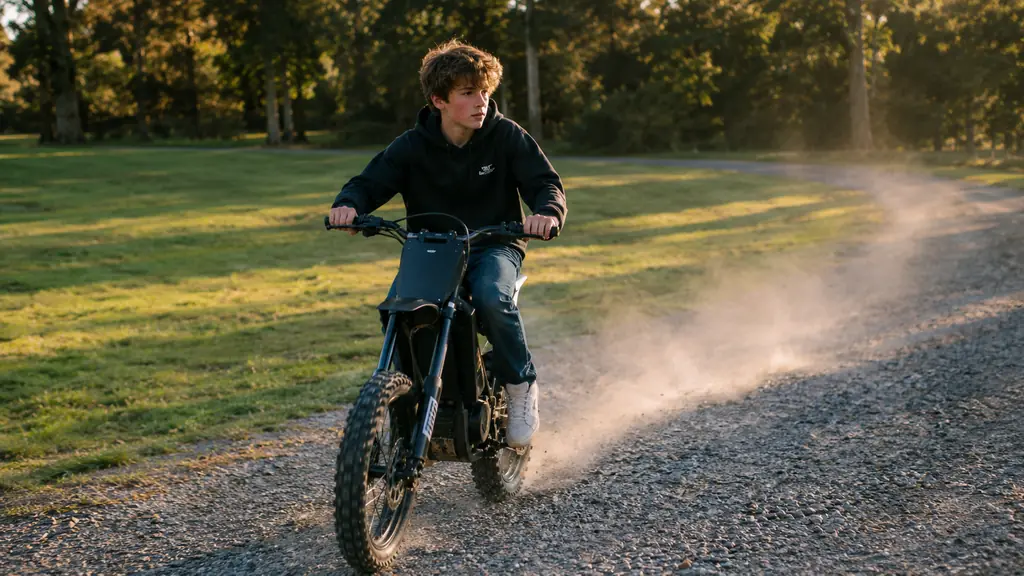
The box for the Razor MX400 Dirt Rocket shows a kid leaning into a turn, dirt kicking up behind the rear wheel, a grin that says this thing is pure fun. What the box does not show is the assembly work, the battery habits, the brake check, or the fact that your kid will want to ride it every single day until the snow flies. I bought one in early April for my son Cody, and after a full season of charging, adjusting, and standing at the edge of the yard watching him ride, I have notes that the listing will not give you.
Before I get into it, a couple of ground rules. I am not a professional mechanic. I am a 42-year-old dad with a workbench, a socket set, and a habit of fixing things myself. I assembled this bike in the garage, charged the battery fully before the first ride, and I have been the one adjusting brakes and checking tire pressure ever since. Everything below comes from real use on our property, not from a borrowed weekend with a loaner unit.
The Quick Verdict
A real electric dirt bike that has held up through a full season of daily use. The honest caveats are assembly time, battery care, and making sure your kid fits the printed age and weight rating.
Amazon Check Today's Price →See today's price on the Razor MX400 Dirt Rocket
After a full season, I would buy it again. The current price on Amazon changes, so check it before you order.
Amazon Check Today's Price on Amazon →How I've Used It
Cody is 10, about 4 foot 7 and 75 pounds, and he treats the MX400 like it is his main job. Our setup matters for this review: we have a long gravel driveway, a flat grass back yard, and a dirt trail along the tree line. That is exactly where this bike lives. It goes on the gravel, the grass, and the trail, and it never touches the concrete pad in front of the garage or the road. We are lucky that he has a place to ride without leaving the property, because this is not a street bike and I would not want it on one.
The routine has been the same since April. Helmet on before the garage door opens, closed-toe shoes, an adult outside. I check the brakes and tire pressure at the start of the season and again after any crash, and so far the worst event has been a tumble on the trail that cost him a scraped elbow. The helmet and the supervision are why that is the worst of it. After a ride, the bike goes back in the garage and the battery charges overnight on the workbench outlet. That rhythm is a big part of what owning this bike actually involves.
What the Box Does Not Tell You About Assembly
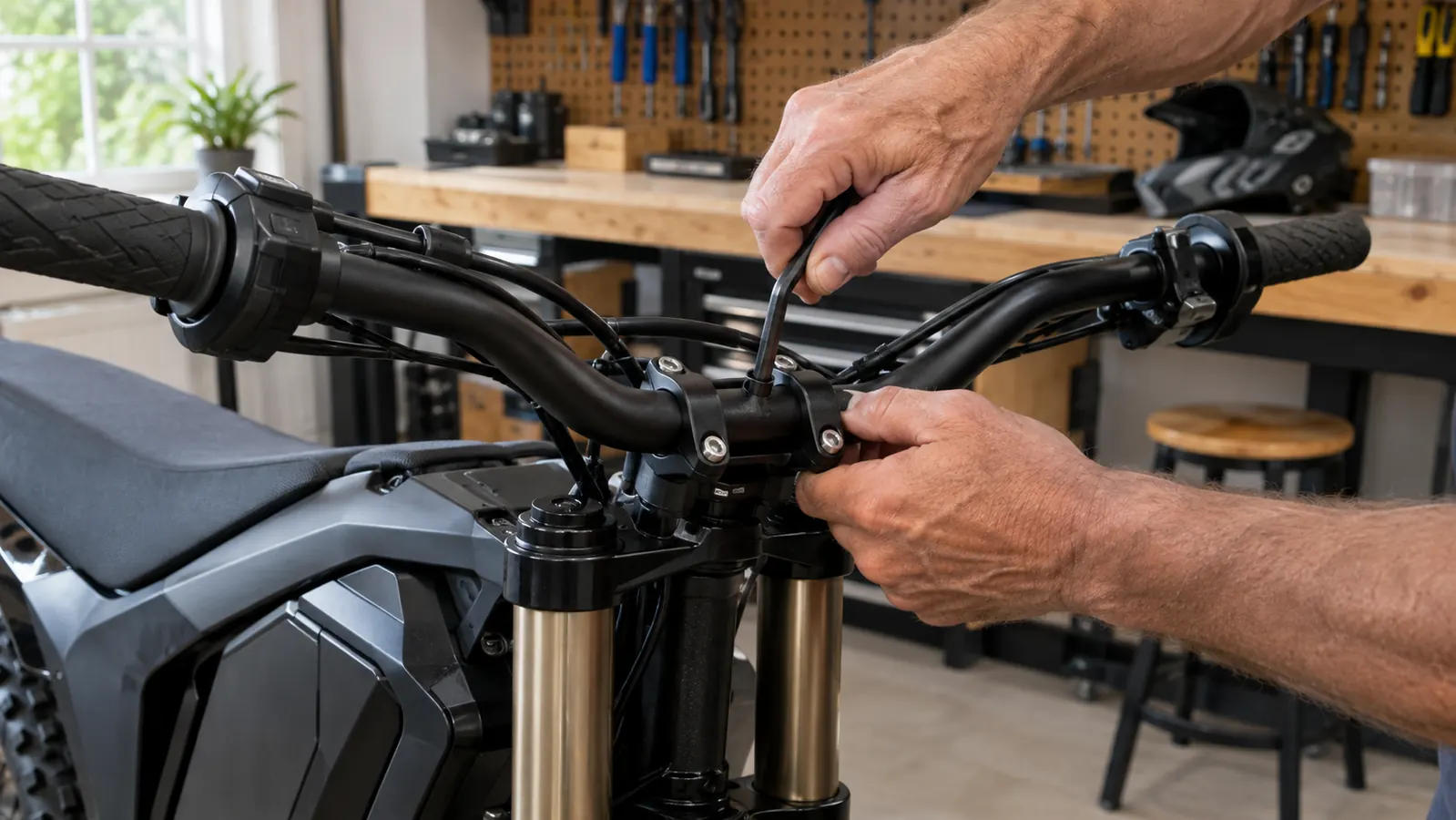
The box makes assembly look like a 15-minute job. In my experience, plan on closer to an hour the first time, especially if you are the careful type. You attach the handlebars, mount the front wheel, and then you get to spend real time on the details the quick-start sheet glosses over: making sure the bars are straight, checking that the wheel spins freely, and adjusting the brake so it actually stops the bike. I have assembled a lot of kids' gear, and this one is on the honest end of the spectrum, but it is not zero work.
The part that deserves the most attention is the brake. On a bike this size, a weak rear brake is not a minor annoyance, it is a safety issue. I adjusted mine before the first ride and have touched it twice since. If you are not comfortable with a wrench, either plan to learn or find someone who is. The manual covers it, but the manual assumes you have done this before. That is one of those things nobody tells you when they hand you the box.
One more assembly note: charge the battery fully before the first ride. I know it is tempting to let a kid rip as soon as the wheels are on, but the first full charge matters for how the battery behaves over the long haul. I plugged it in on the workbench outlet overnight, and I have treated the battery with that same routine all season.
The tool list is short: a couple of wrenches, a Phillips screwdriver, and a floor or a workbench. Nothing exotic. But give yourself room to work and read the manual once all the way through before you start. The parts that look obvious are the ones that are easy to get slightly wrong, and slightly wrong on a bike means a wobble at speed that you will have to chase down later. Take your time the first time and you will not have to take it apart again.
Battery Habits That Matter More Than the Spec Sheet
The listing will tell you the Razor MX400 Dirt Rocket runs on a 24-volt battery, and the spec sheet stops there. What the box does not tell you is that the battery is the part of the bike you actually manage. My rule is simple: it charges overnight, every night after a ride, and a full charge covers a good afternoon of riding with breaks. I do not promise run time in minutes, because run time depends on weight, terrain, and how hard the kid is on the throttle. Cody rides hard, so I plan the day around the charge, not the other way around.
The other habit is storage. This bike lives in the garage, not outside, and the battery charges on the wall outlet on the workbench side. Cold nights, rain, snow, none of that touches it. I cannot tell you from a spec sheet whether that extends the battery's life, but I can tell you that six months in, the battery still holds a full afternoon of riding, and I plan to keep treating it the same way. Batteries are the one part of an electric bike that people quietly complain about, and most of those complaints trace back to charging habits.
One thing I have learned the hard way with other gear is to keep the battery off the concrete floor when it is cold. Ours sits in the garage on the workbench side, plugged into the wall outlet, and that has been enough all season. If you live somewhere with real winters, the bike will sit more between rides, and a battery that is stored charged and dry will treat you better than one that is left dead in a cold garage.
The Fit Question Nobody Mentions
Here is the honest part. Cody fits this bike right now, but he is not near the top of the range. The listing says the max rider weight is 140 pounds, and for age, follow the age and weight rating Razor prints for it. At 4 foot 7 and 75 pounds, he is solidly in the middle of the range, and that shows up in how he rides. He can reach the ground easily, the handlebars are at a comfortable height, and he has enough weight to keep the rear wheel planted on loose gravel. A kid at the very bottom of the size range would have a different experience.
The thing the box does not tell you is that this bike grows with a kid up to a point. Cody has room before he approaches the weight limit, which means the bike is not something he will outgrow this season or next. But that also means you should measure your kid against the rating before you buy, not after. If your child is below the printed age and weight rating, this is not the bike for them yet. That is not a knock on the product. It is the difference between a good purchase and a frustrating one.
One more thing about weight, because nobody puts it in the review: the bike's behavior changes depending on where your kid sits in that range. A lighter rider gets a different ride than a heavier one. Cody, at 75 pounds, keeps the rear wheel planted and rides with confidence. A smaller kid will find the same bike quicker to turn and easier to throw around, which sounds fun until you are watching from the edge of the yard. Know your rider's size, and you will know what to expect.
Safety, Without the Lecture
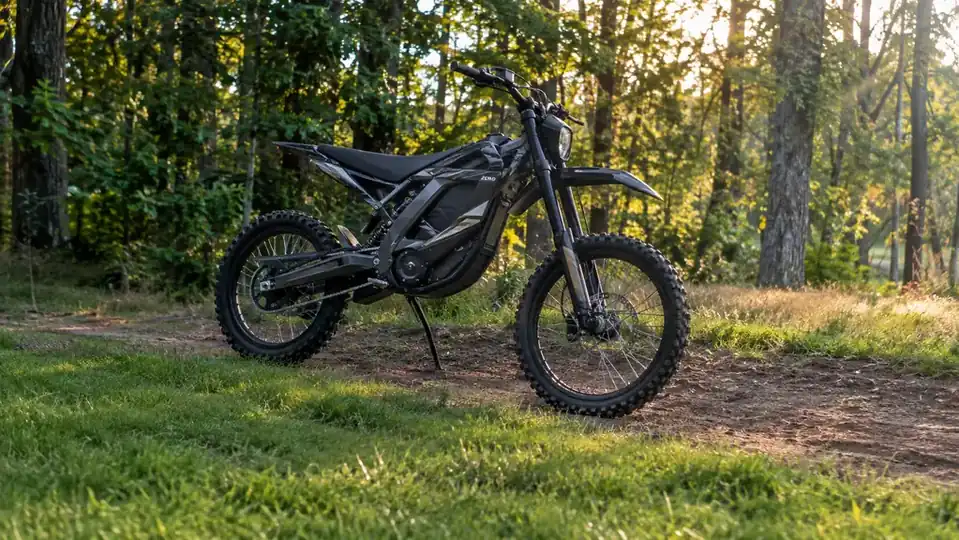
I am not going to stand on a soapbox, because the rules are simple and they work. Helmet on every ride. Closed-toe shoes. An adult outside. No public roads, ever. I check the brakes and tire pressure before the season and after any crash. Those are the rules in our house, and they are non-negotiable, and they are the reason the worst thing that has happened all season is a scraped elbow from a low-speed tumble on the trail.
The box does not tell you that the bike is fast enough to demand respect. Fourteen miles per hour does not sound like much on paper, but on a gravel driveway with a 75-pound rider, it feels quicker than it reads. That is exactly why the age and weight rating matters, and why an adult outside is not a suggestion. The bike does what it is supposed to do. Your job is to make sure the rider is ready for it.
One thing I will add, because it is the kind of detail a review should give you: the surface matters. This bike is at home on gravel, grass, and dirt, and I keep it there. I do not ride it on the concrete pad, because that is not what it is for, and I never let Cody take it on the road. If you do not have a safe off-road place to ride, factor that into your decision before you order, not after.
The bike is quiet in a way that surprises people. An electric motor does not announce itself like a gas engine, which means a kid can be on it before you register that it is moving. That is another reason the adult-outside rule is not about distrusting the bike, it is about the fact that a quiet, fast machine needs a set of eyes on it. Cody knows the rules. I still stand at the edge of the yard every single time.
Six months in, the only things I have touched are the brakes, the chain tension, and the charger. That is the part the box cannot promise.
What Surprised Me, and What I'd Improve
The first surprise is how much he actually rides it. I expected a few weeks of novelty and then a slide toward the back of the garage. Instead, the MX400 has been the thing he asks about after school, the thing that gets him outside without negotiation. On a school night in the fall, with the light fading, he still wants a lap on the trail. The box does not tell you that the hard part will be getting him off it, not onto it.
The second surprise is how little has gone wrong. Normal wear, sure, and I have adjusted the brake and kept an eye on the chain. Maintenance has been light but real: a check of the chain tension, a snug on the handlebar bolts when I notice any play, a wipe-down when it goes back in the garage. That is maybe ten minutes a week, and it is the kind of thing the box does not mention because it assumes you will figure it out. Nothing has broken, nothing has needed a replacement part, and the battery has been consistent all season. The only real cost is cosmetic: the bike picks up a film of gravel dust that I wipe down when I charge it. It is not a showpiece, it is a tool for being a kid outdoors. I bought this with my own money and assembled it myself, so I have no reason to soften the report.
If I could change one thing, it would be the setup instructions. The quick-start sheet is fine for someone who has assembled a bike before, but it assumes a level of comfort that not every parent has. I would like a page that spells out the brake adjustment with a little more patience. That is a documentation complaint, not a product complaint, and it is fixable.
The other thing I would flag is the learning curve on loose gravel. A kid coming from a pedal bike expects the front wheel to track the way it does on pavement. On gravel, the front end washes a little in the turns, and it took Cody a few rides to get the feel. That is not a defect, it is the nature of riding on loose dirt, and it is exactly why the first rides should happen at low speed with an adult watching.
What I Liked
- Real dirt bike feel at up to 14 mph, quick enough to be fun without being reckless
- The 24-volt battery has held up all season with an overnight charging routine
- Cody, at 4 foot 7 and 75 pounds, fits with room to grow toward the 140-pound limit
- Assembly is doable with basic tools if you budget about an hour
- Nothing has broken in six months of near-daily use
Where It Falls Short
- The box undersells the assembly time and the brake adjustment
- Battery care is a real habit: charge it overnight and store it in the garage
- Kids at the bottom of the size range will handle it differently than Cody does
- It is a dusty machine that needs adult supervision and a safe off-road place to ride
Who This Is For
This is for a kid who fits the age and weight rating Razor prints for it, which in our house means a 10-year-old in the middle of the range. It is for families with a yard, a long driveway, or a trail where a bike can actually be ridden off-road. It is for parents who will supervise, enforce the helmet rule, and spend an hour with a wrench on day one. And it is for kids who already have basic bike balance, because the MX400 is a step up from a pedal bike, not a replacement for learning to ride.
Who Should Skip It
Skip it if your kid is below the printed age and weight rating. Skip it if you have no off-road space, because this is not a street bike and I would not pretend otherwise. Skip it if you want zero assembly and zero maintenance, because the honest answer is that both are part of the deal. And skip it if you want a machine for smooth pavement, because the bike is built for loose surfaces and it should stay there. None of those are failures of the product. They are mismatches between the bike and the situation.
My honest bottom line after a full season
The Razor MX400 Dirt Rocket is the piece of gear Cody has reached for first on the trail since April, and I would buy it again. If your kid fits the rating and you have a safe place to ride, check today's price on Amazon.
Amazon Check Today's Price on Amazon →